
Elizabeth I and the Art of the Image
The Elizabeth Collection began, as many of our ideas do, with a woman and a moment in history we couldn't stop thinking about. When I was 17, my first job was working for a jeweller in the grounds of Hatfield House, where Queen Elizabeth grew up. As a history nerd, I found walking in the footsteps of Elizabeth completely inspiring and fell a little more in love with her. The Elizabethan era is full of richness: colour, symbolism and amazing jewellery, of course! It's also a period rarely reimagined in modern fine jewellery, so we thought it was time to change that.
There was always intent behind historical jewels. For Elizabeth I, every detail in her portraits was deliberate. A string of pearls, a sun, a rose - these weren't just decorative touches. They were part of how she told the world who she was: intelligent, strategic, and unmistakably powerful. She was the Virgin Queen, Gloriana, the figure of a golden age. That use of jewellery to communicate something deeper still resonates today, and it's a thread we followed closely.

Queen Elizabeth I ('The Ditchley portrait') by Marcus Gheeraerts the Younger. Oil on canvas, circa 1592, NPG 2561 © National Portrait Gallery, London
A Hoard of Influence
The Cheapside Hoard - a collection of 16th- and 17th-century jewels found untouched in a London cellar in 1912 - offered an early spark of inspiration. These weren't necessarily royal pieces, but jewels made for merchants and the elite: full of character, bold in style, and often surprisingly playful. One gem-set floral brooch, in particular, helped shape our rose ring. We didn't replicate it, but reimagined it in our own way with vivid gems in greens, blues & pinks. Garlands of enamelled floral chains from the Hoard also inspired our approach to pendants, which we've refined into simpler, wearable pieces with a more modern feel.
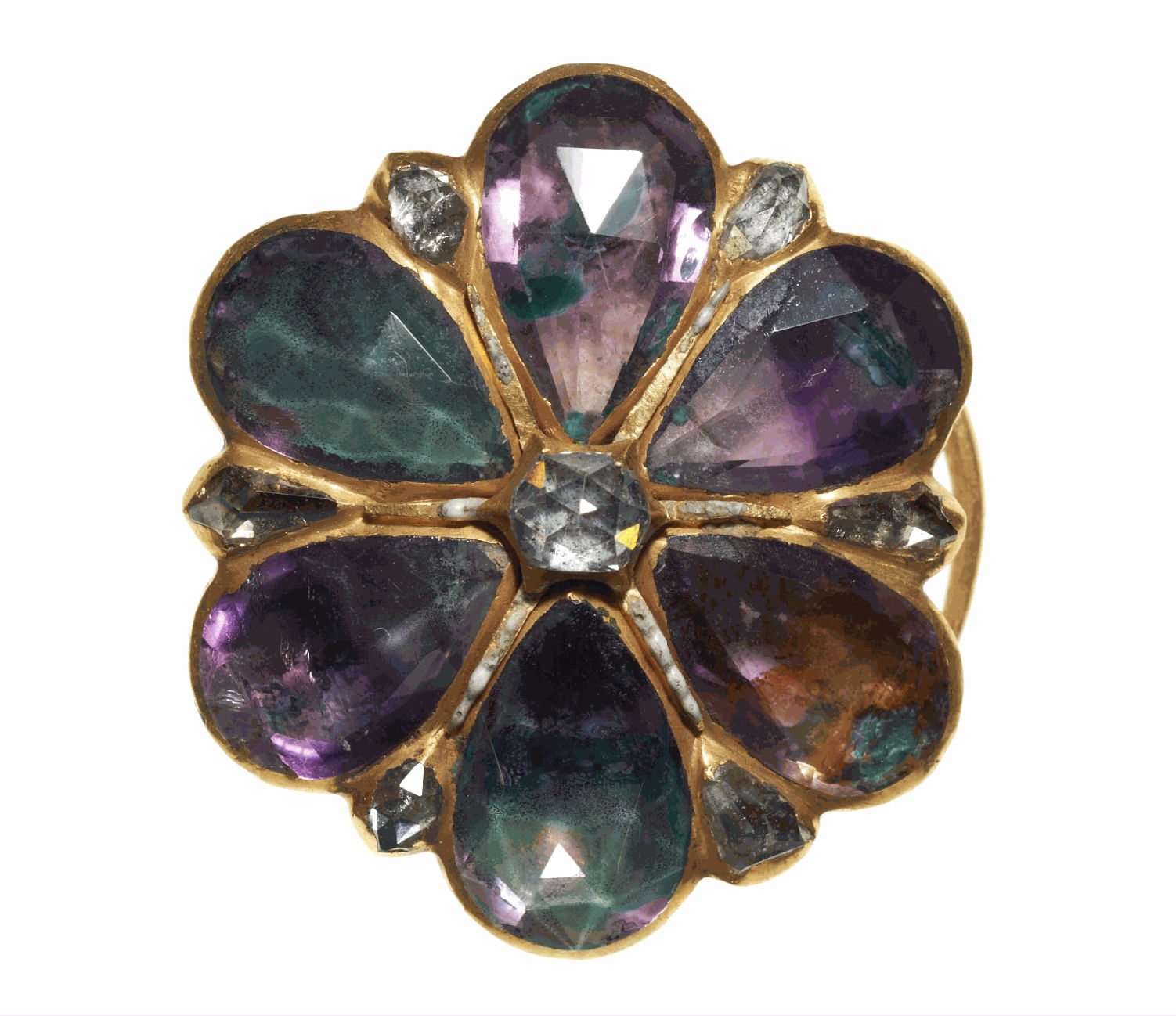
Cheapside Hoard, Amethyst & Rose-cut diamond brooch © London Museum
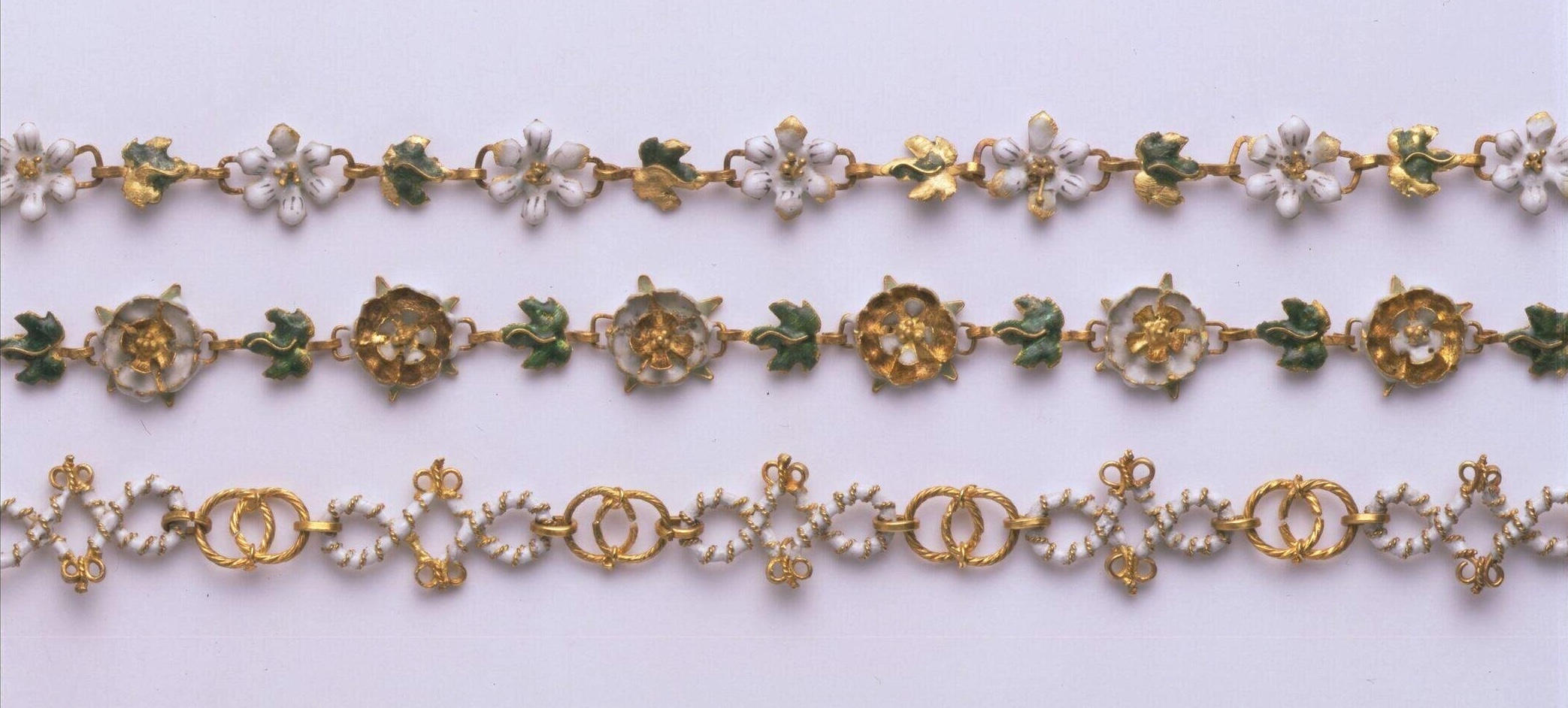
Cheapside Hoard, Gold & enamel chains © Victoria and Albert Museum, London
Our pieces are handmade in London, just a stone's throw from where the Cheapside Hoard was discovered. Using traditional techniques that wouldn't have felt out of place to Elizabethan goldsmiths, each jewel is carefully created with an eye for detail and quality. This connection to place and craftsmanship is part of what makes the Elizabeth Collection feel timeless. With every piece it feels like we're linking past and present, especially as we also source gems from around the world, like in the Cheapside Hoard.
Reimagining the Rose
We didn't want to recreate or replicate Elizabethan jewels; they belonged to a different world. Instead, we focused on the meanings behind them. The rose appears again and again in Elizabeth I's portraits: a symbol of the Tudor dynasty, the Virgin Mary, and her identity as the Virgin Queen. But the rose has always carried other meanings too: love, beauty, and femininity.
Shakespeare, writing during Elizabeth's reign, returned to roses more than any other flower. In The Two Noble Kinsmen, Emilia declares: "Of all flowers, methinks a rose is best." We couldn't agree more.
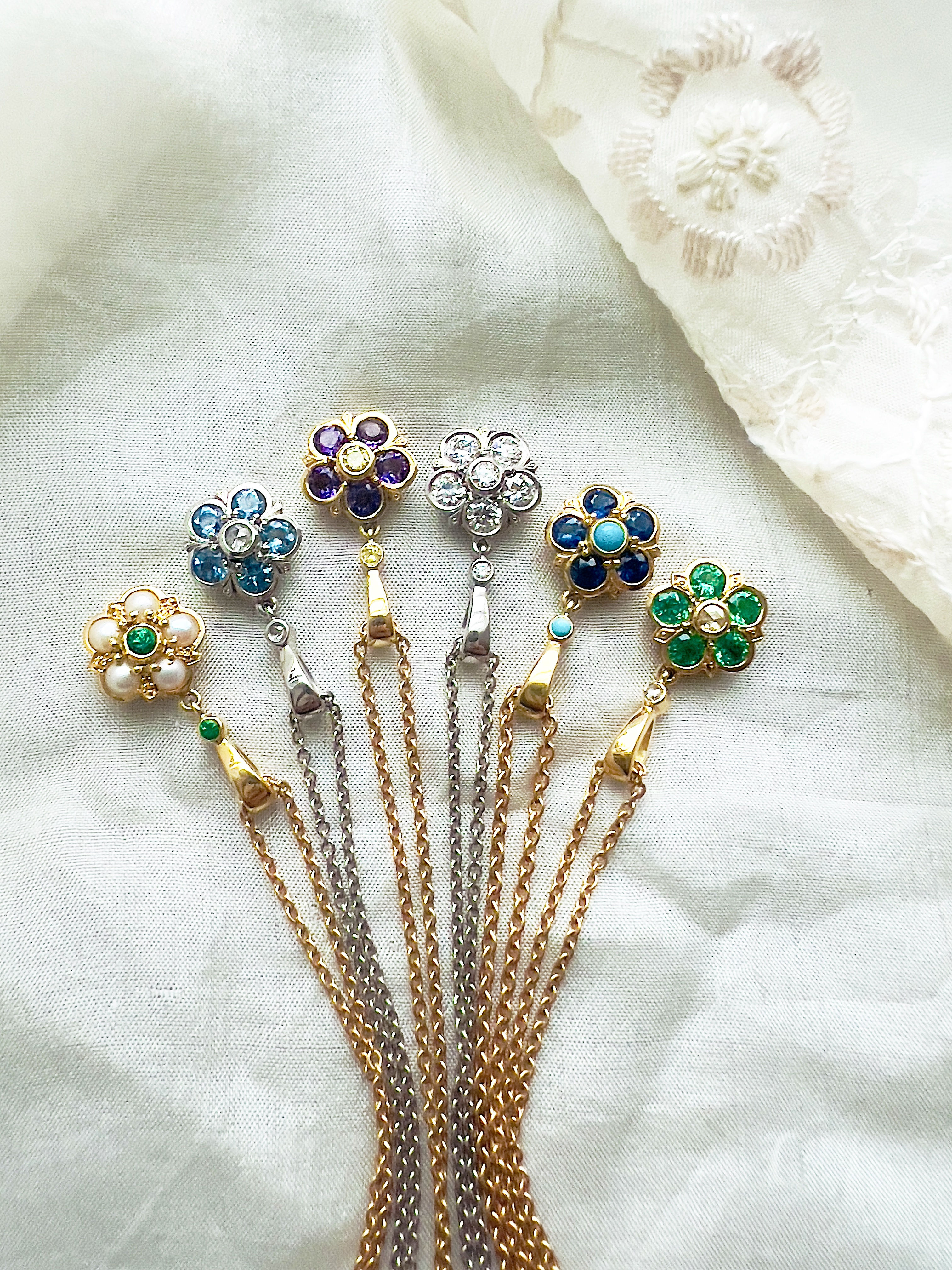
Aril Jewels Rose pendants
You'll find roses blooming throughout the collection. Each one is shaped through carefully considered arrangements of old diamond cuts, gemstones, and colour. They are never overly ornate and are always wearable for modern women, whether with an evening dress or a pair of jeans and a jumper.
Rose-cut diamonds, so called because their domed shape and small triangular facets supposedly resemble a rosebud unfurling, feature prominently in this collection. First developed in the 16th century, they would have been the latest innovation in Elizabeth's time and were beloved for their shimmer in candlelit rooms. Their gentler sparkle gives them a quiet, romantic quality that felt especially suited to this collection.
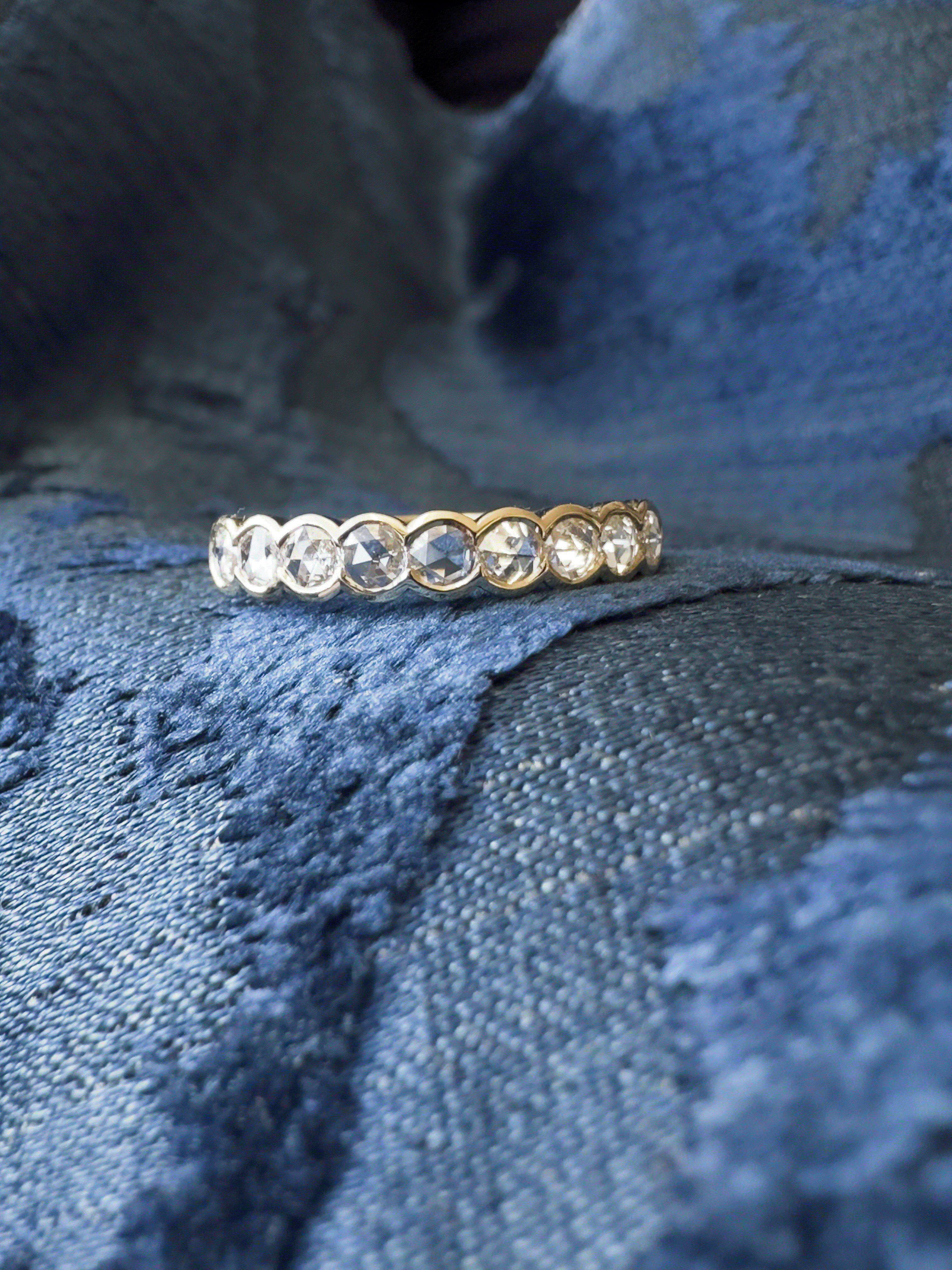
Aril Jewels rose-cut diamond half eternity ring
Colour, Character, and Contrast
One of the things that struck us most about the Cheapside Hoard was its colour and broad array of gemstones. The pieces are bold, joyful and full of interesting and unexpected combinations of coloured enamel and gems. That spirit gave us permission to push our own colour combinations further. Some of our pairings are rooted in that world, like emerald & rose-cut diamond, whereas others are entirely our own, inspired by the richness of Elizabethan embroidery and portraiture but not bound by it. The result is something that feels connected to that era without being limited by it.
Elizabethan jewels are known for their drama and opulence. Ours take a lighter, more wearable and modern approach. We've explored graduated pinks, reds, and blues in our rose rings and played with unusual gemstone pairings that feel both romantic and unexpected. We've also introduced metals that weren't available in the Elizabethan era: platinum and 18ct rose gold, to complement the colourful gems perfectly.
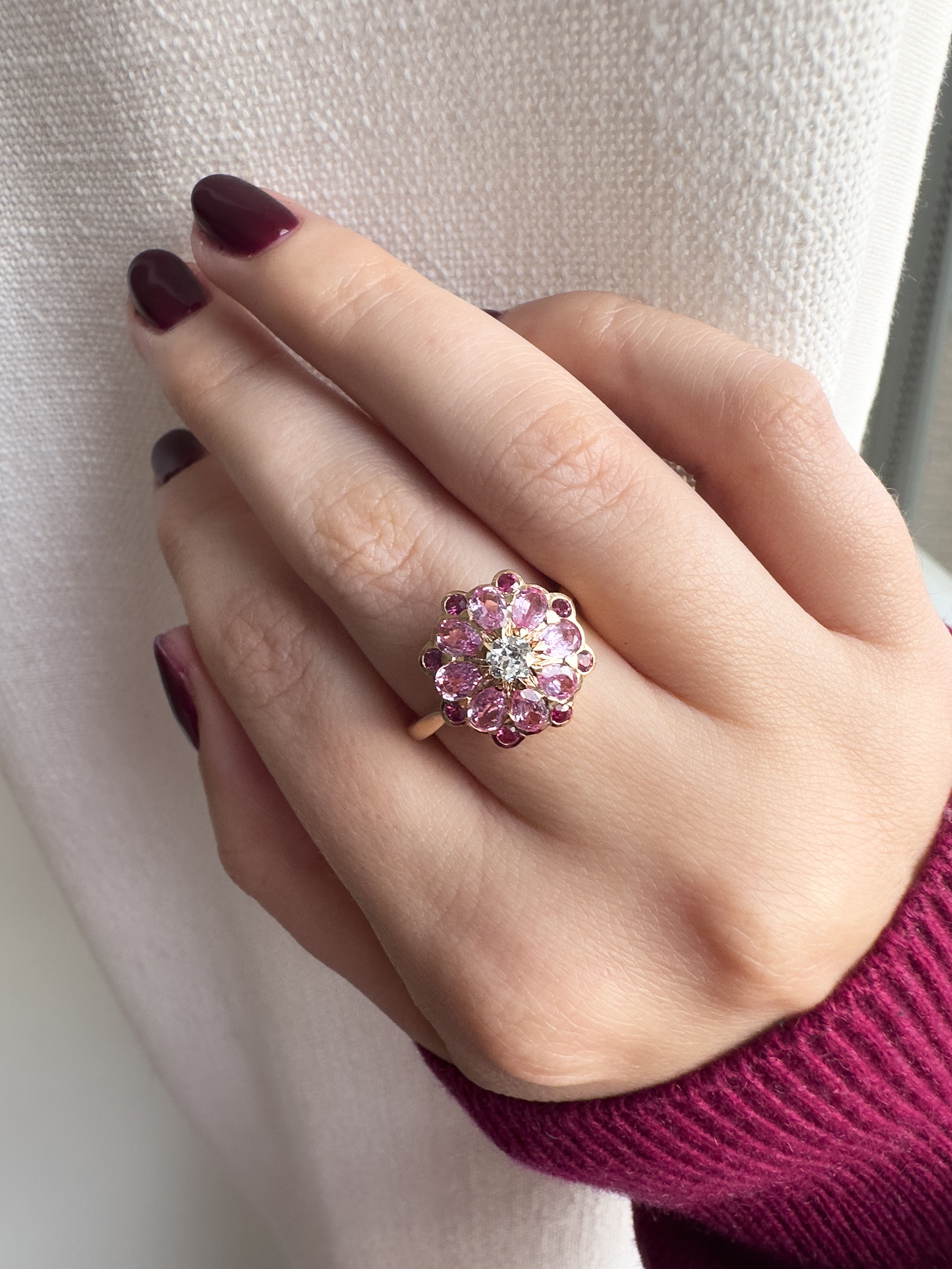
Aril Jewels pink sapphire, ruby & old-cut diamond Rose ring
You'll also find hidden details, just for the wearer. Pendants and rings feature fluted backs, some set with a single, secret rose-cut diamond. It's a nod to historical craftsmanship when even the back of a jewel was carefully finished, often enamelled or engraved in the Elizabethan age.
Why the Elizabeth Collection?
Not everyone who wears a piece from this collection will be thinking about Elizabeth I. And that's exactly how it should be! You may just fall in love with a piece's beauty, or a rose may have a particular meaning to you. Whatever draws you to it, I hope the story behind it makes it mean a little bit more. While the journey may have begun with our love of history and symbolism, it will end with how the piece makes you feel when it's yours.
Discover the Elizabeth Collection
About the author

Chloë Woodmansterne FGA DGA
Chloë Woodmansterne is the founder of Aril Jewels, a fine jewellery brand based in London which specialises in historically inspired engagement rings and fine jewellery, made by hand using antique old-cut diamonds and richly coloured gemstones. She studied History at university and has worked in the fine jewellery trade for over 15 years, including for some of the UK's most prestigious jewellery houses. She has been a qualified gemmologist (FGA DGA) since 2012. Aril Jewels has been a finalist at the NAJ Awards, the UK Jewellery Awards, and the Professional Jeweller Awards.


